

DEI platform for employers
Prototype to be used for MVP to measure and track diversity, equity, and inclusion initiatives and implementation.
Expertise
roles
Deliverables
tools
Figma, Illustrator,
Google docs, Trello, Zoom
Project overview
chezie
Overview
Dyversifi is an anonymous job review web based platform for diverse professionals and students –like Glassdoor, but for minorities. ‘Chezie’ is a new feature that is designed to help employers establish and maintain their Diversity, Equity and Inclusion (DEI) programs (talent, community and accountability) all in one place.
Defining the Problem
How might we develop a product that will help employers establish, track and maintain their diversity, Equity and Inclusion (DEI) programs all in one place?
The Solution
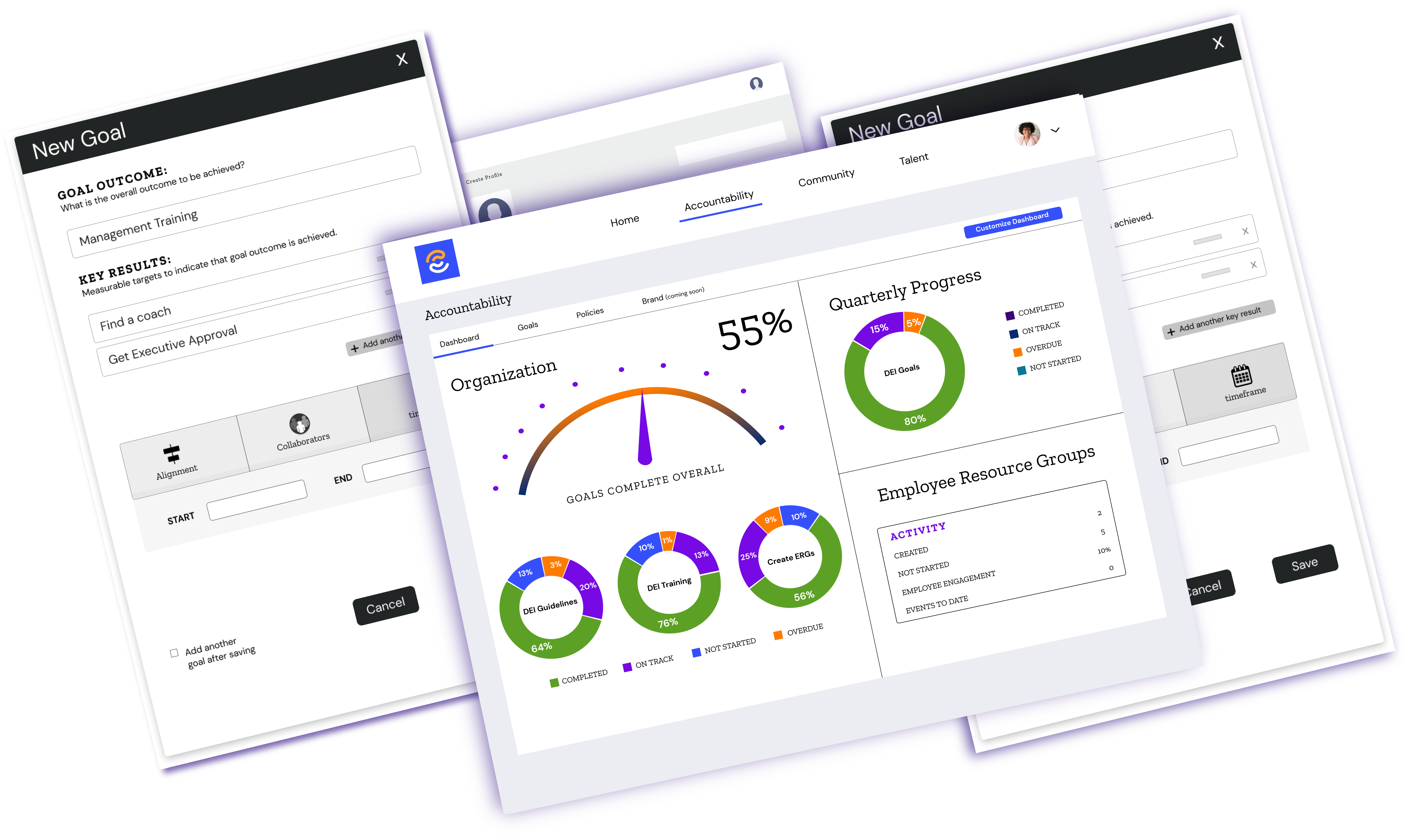
Chezie is a Software as a Service (SaaS) platform that helps employers track and measure the implementation of their diversity, equity and inclusion (DEI) goals and initiatives.
Execution
User Research & Competitive Analysis
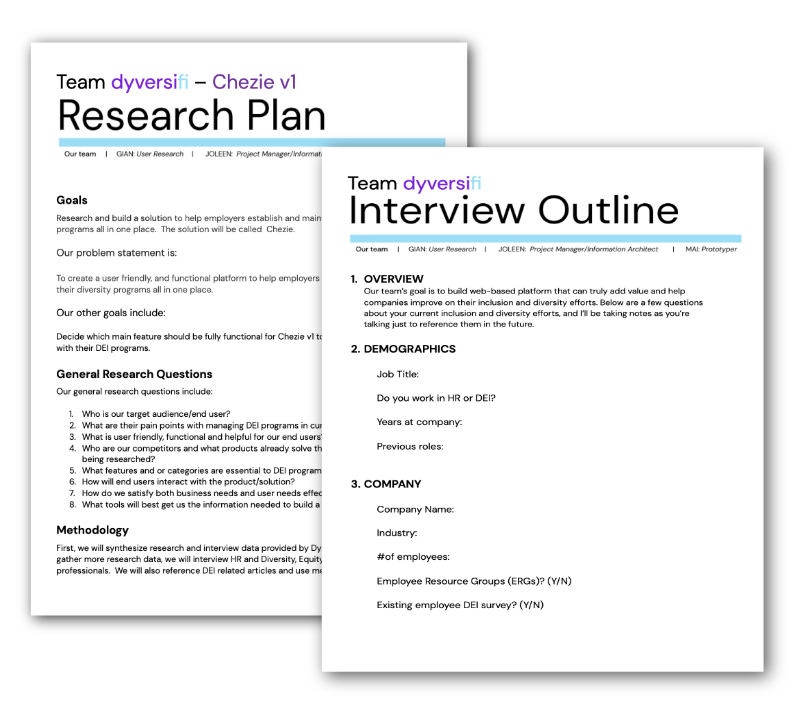
The first phase of the process to solve the problem was research. Before beginning our research, as the project manager I requested any existing company research. We performed user research to understand the end users for the product and competitive analysis to scope out competitor diversity, equity and inclusion (DEI) products and services.
Competitive analysis
We performed a competitive analysis which confirmed the assumption that HR professionals and DEI professionals were the end users of DEI software. We then synthesized competitor and market research using SWOT (Strength, Weakness, Opportunity, and Threat) analysis. The analysis showed that a plethora of tools existed to help companies with diversity rating, hiring and training but there was a need for DEI accountability and diverse talent retention tools. Very few web-based software help companies track DEI initiatives and implementation. We concluded that it was viable to focus on accountability features in the first version of Chezie.
User Interviews
We interviewed human resource professionals and DEI professionals. The interviews revealed that companies lack strong DEI goals, had poor implementation of goals and no way of tracking DEI progress.
Key research insights
- 83 % of companies did not have a DEI program or established goals
- Establishing good DEI policies and strategies was crucial for longevity
- There is currently no dedicated software for tracking DEI goals or initiatives
- It was important to track DEI goals in order to establish accountability and transparency within organizations
Target Users
Our research showed three categories of end users and company sizes.
End users:
- CEOs
Painpoint: Executives recognize that there is a gap between DEI implementation and meaningful impact . Simply launching a DEI program isn’t enough. If initiatives aren’t actively tracked and fine-tuned, they may have little to no impact on DEI goals . If employees from underrepresented groups fail to benefit from DEI programs they are likely to grow disenchanted with their employer’s efforts and may start seeking employment elsewhere. This could lead to the loss of top talent which would in turn affect the company's productivity and bottomline. - Human Resource Personnel
Painpoint: Lack tools to launch a coordinated DEI initiative. Need tools to track DEI efforts and progress to help keep companies accountable and transparent. - Diversity, Equity and Inclusion Officers
Painpoint: Lack tools to launch a coordinated DEI initiative. Need tools to track DEI efforts and progress to help keep companies accountable and transparent.
Company sizes:
- 50-100 employees
- 300-500 Employees
- Over 1200 employees
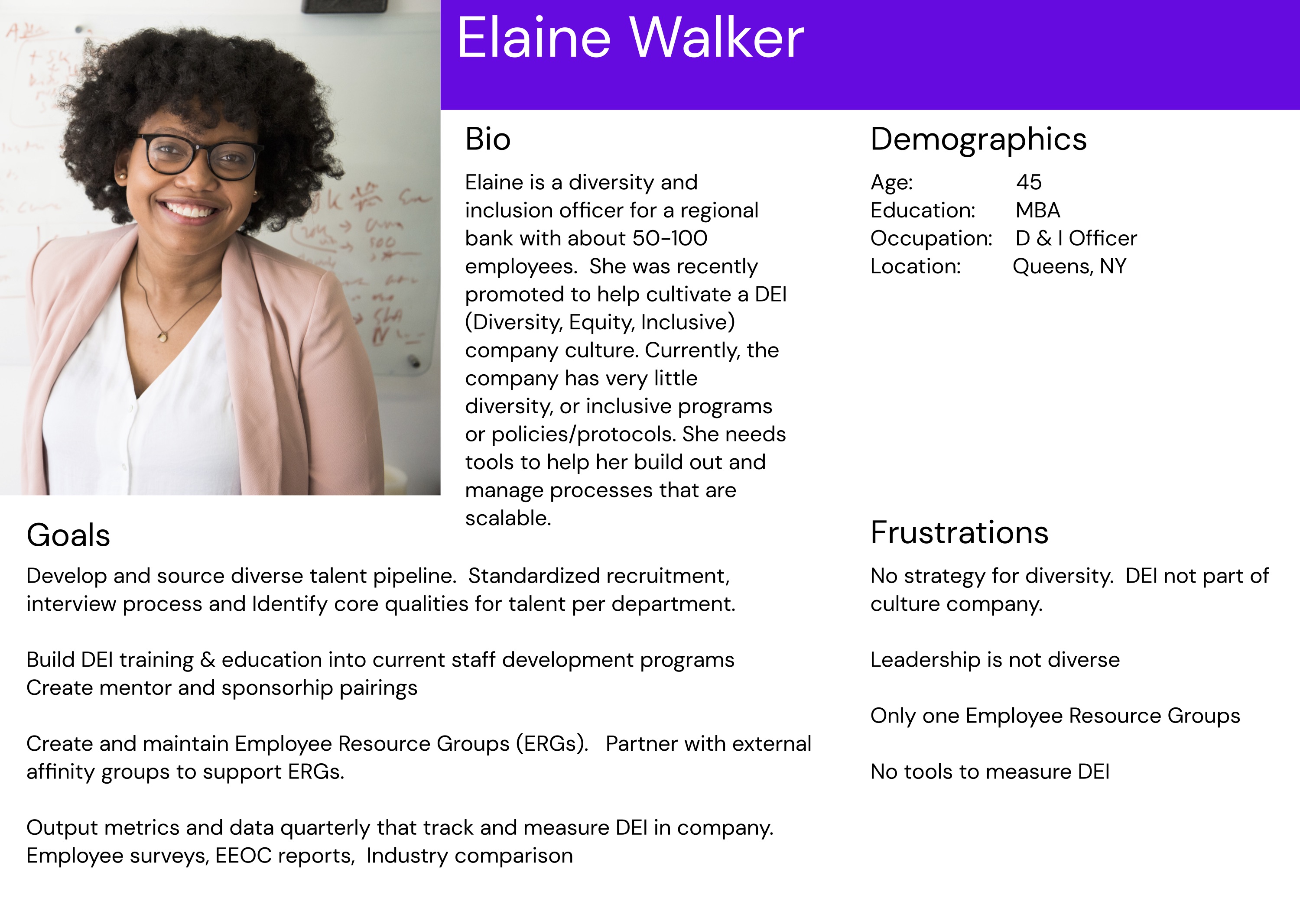
For the first version of Chezie, Dyversifi's CEO wanted to focus on company sizes with 50-100 people with a DEI officer. Our research indicated that a DEI Officer would be the primary company employee using a DEI software on a regular basis. A company size of 50-100 employees is usually in the initial stages of their DEI programs and would be prime for testing the first version of Chezie as a new product of its kind.
User stories and flows
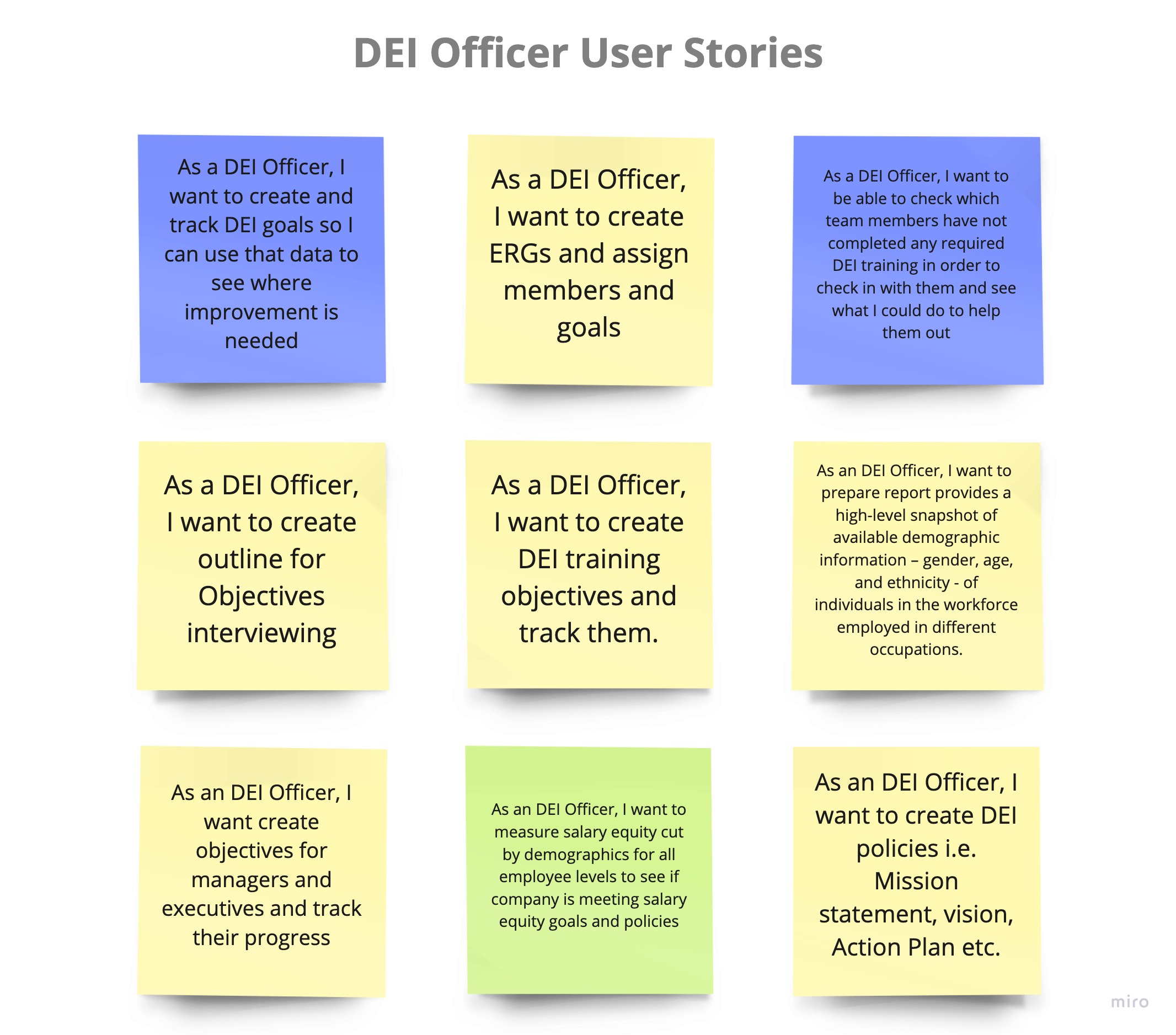
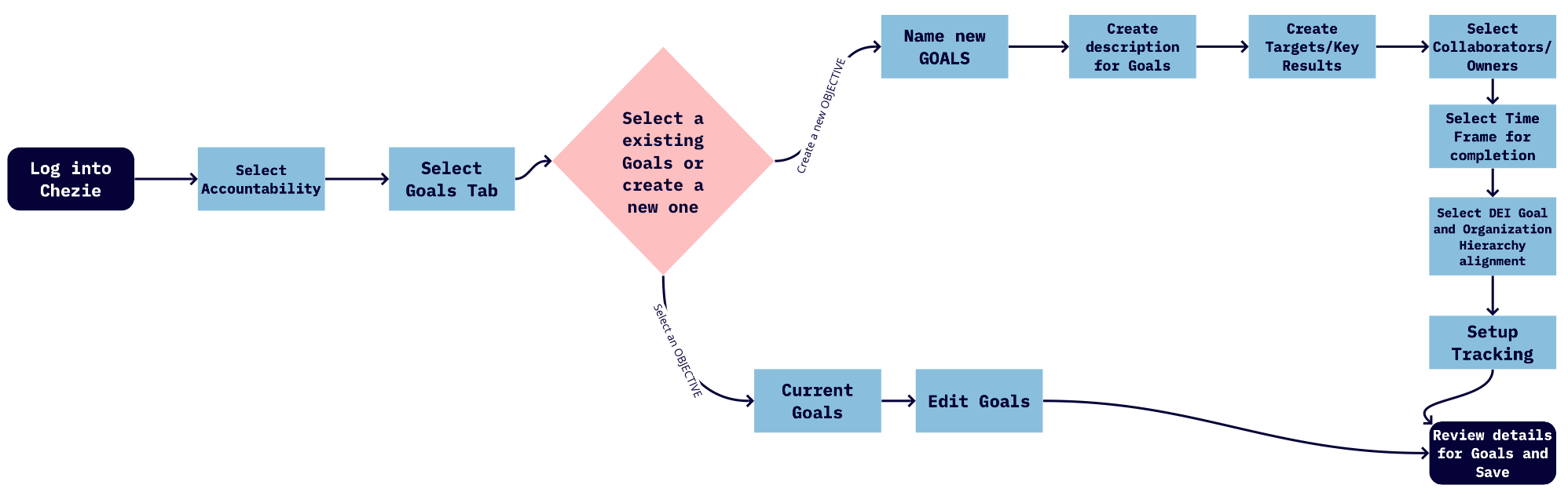
Once we identified our persona, a DEI Officer, we brainstormed types of tasks the persona would perform in Chezie within the accountability feature. We created user stories from which emerged two main user flows :
- creating policies
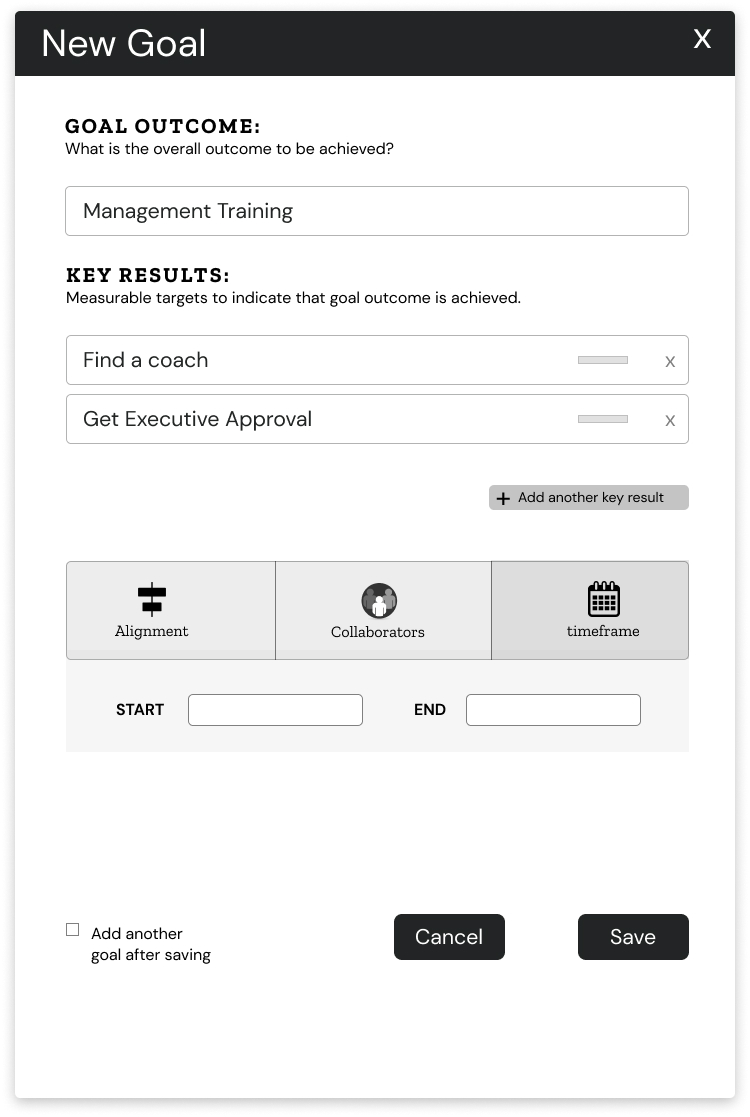
- Creating Goals
Based on our initial interviews, the creation of goals and being able to track them would be the most helpful tool for most employers' implementation of DEI goals and initiatives. Therefore the main feature of the Accountability pillar for Chezie v1 was creating and tracking goals. User interviews also revealed that DEI Officers liaison between executives and HR departments to create DEI policies, goals and strategy. DEI Officers responsibilities include developing the standards and metrics for measuring each goal. The standard and metrics for each goal will vary according to company size, the industry and local demographics.
User Flow to create Goals
Results
Wireframes & Low fidelity Mockups
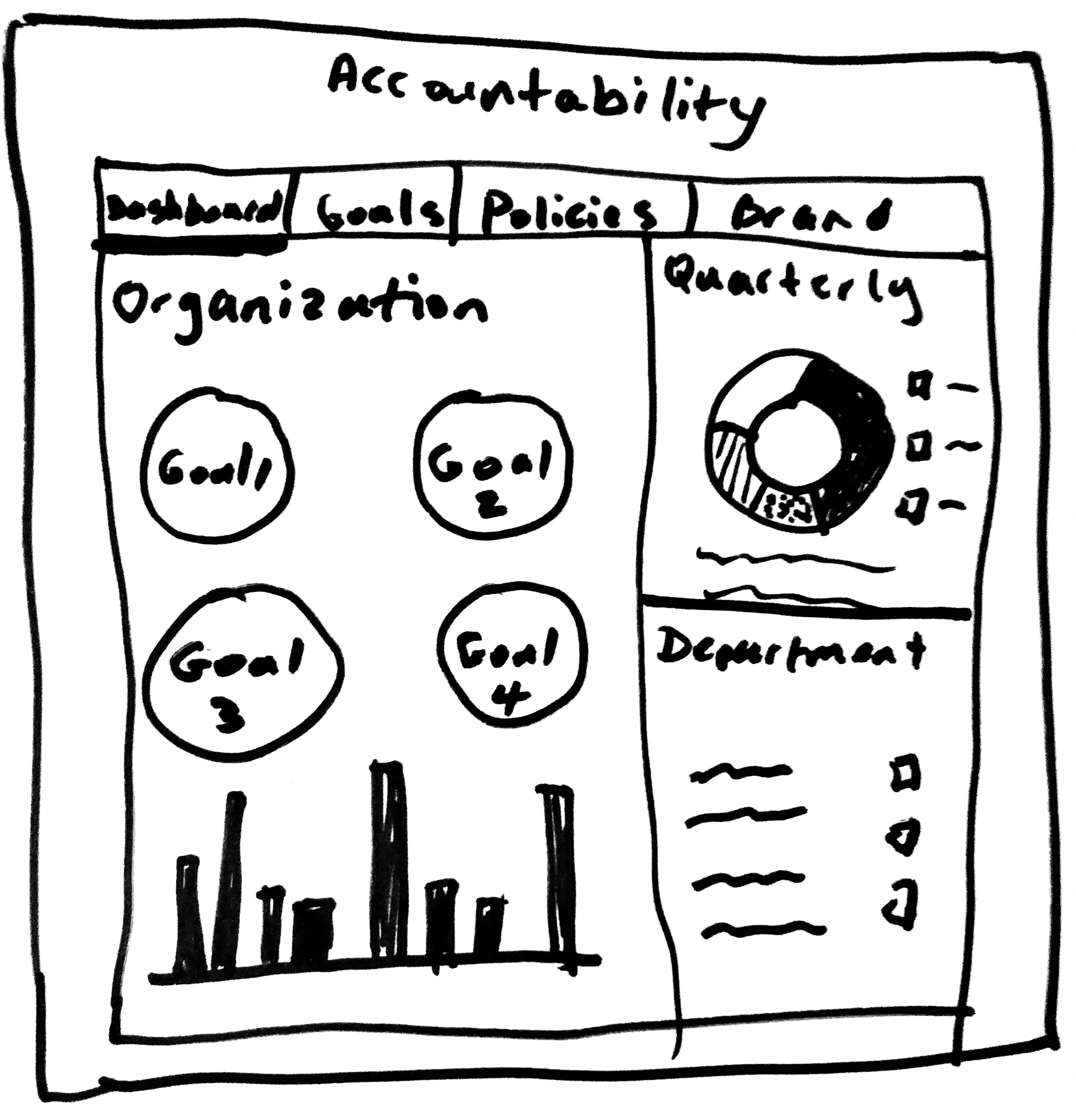
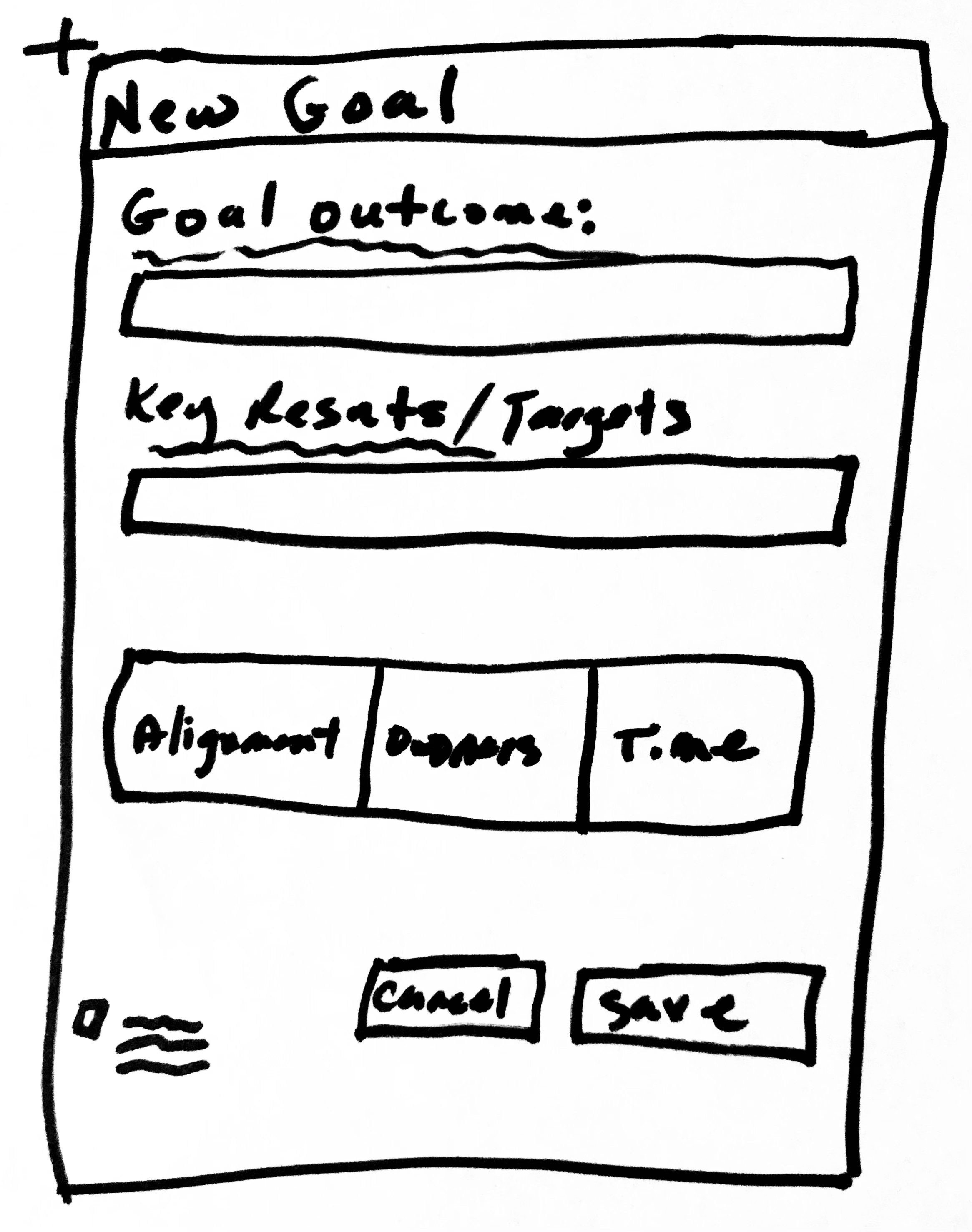
Sketches and wireframes
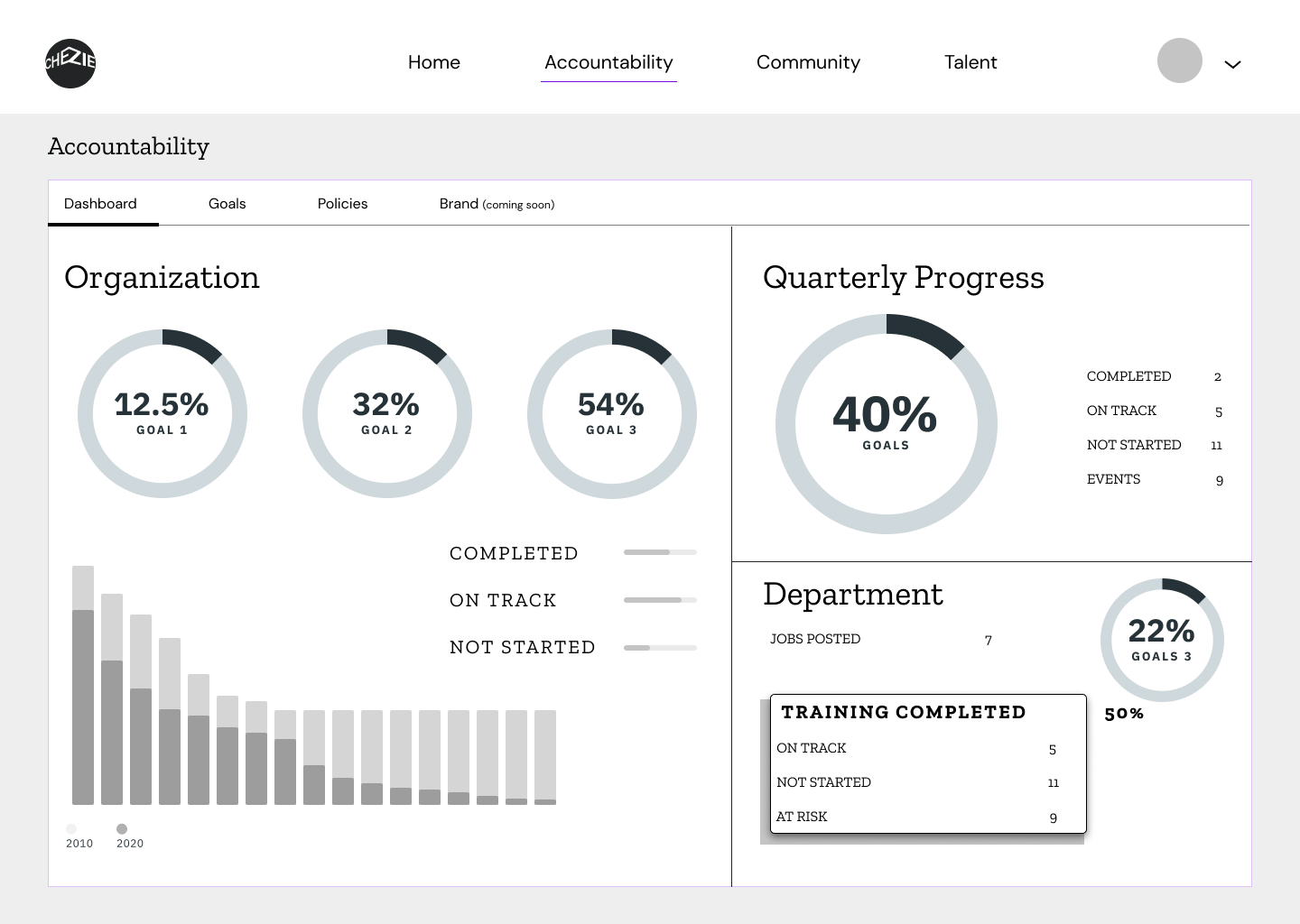
After converting the user stories into user flows, we sketched out our solutions and then created mockups to quickly test out our design assumptions using a moderated test via Zoom.
Usability Testing
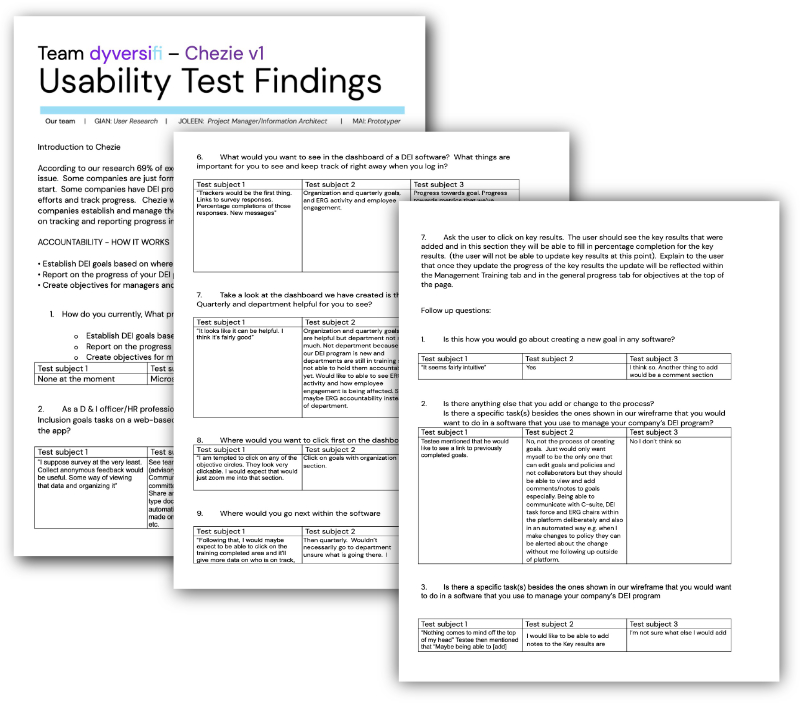
The project lead researcher and myself conducted usability testing on our mid fidelity wireframes via moderated Zoom video. We assumed that users had some experience with navigating dashboards, data representations, and creating a new task within a software. Findings from the usability test were:
- Need tools to communicate within the application with collaborators through comments and or feedback
- need customizable dashboard to track what is important to a company
- Need a way to sort and or filter goals
Prototype
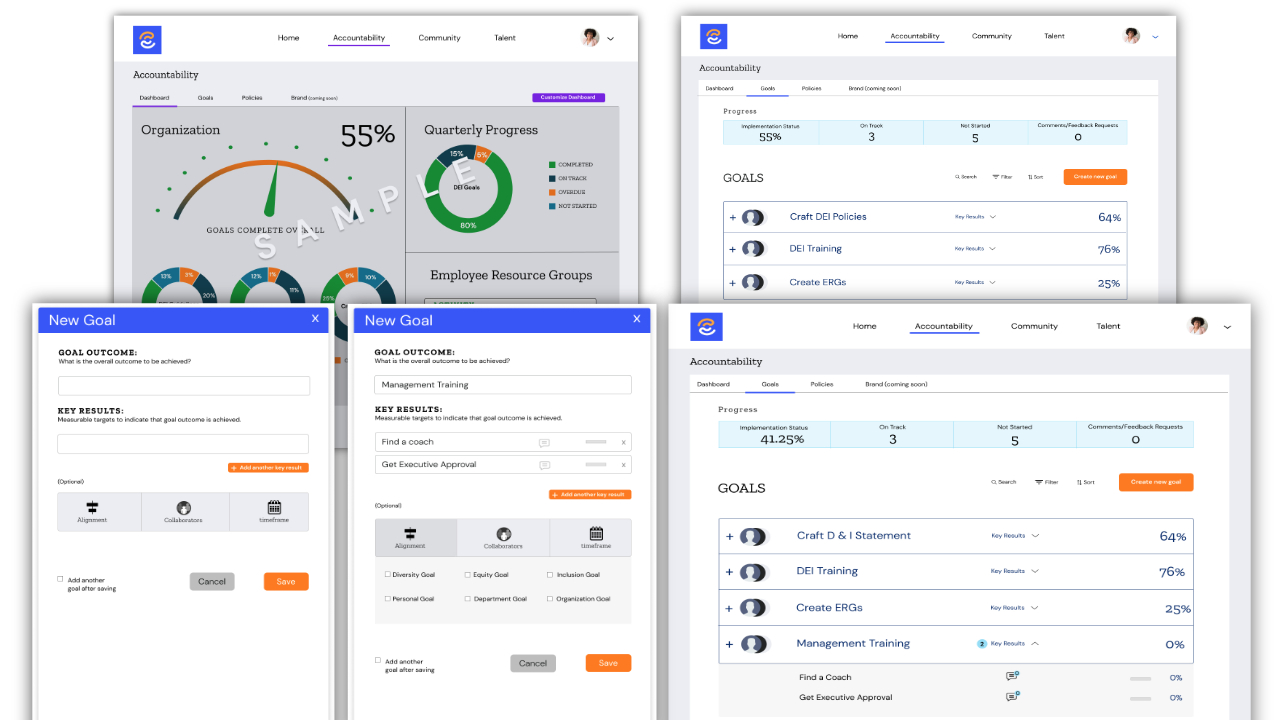
Moving to prototyping, I focused on incorporating feedback from our usability tests using specific KPIs on the dashboard. Testers indicated that DEI guidelines, training, and creating Employee Resource Groups (ERGs) were important to track and view especially during the beginning stages of DEI initiatives. These KPIs were crucial for tracking, measuring and scaling DEI efforts. Testing also revealed that users needed collaboration tools to give and receive feedback on KPIs. A successful DEI program is a collaborative and transparent.
Lessons and next steps
I was grateful for the opportunity to work on a project that resonated with me personally. Working on a project with a quick turnaround time certainly had its challenges, but I realized that testing early and iterating quickly allowed us to meet our deadline. We allowed research to lead our design decisions which resulted in a positive customer experience and a shipped product. Both the business and customer were happy. Looking ahead for the MVP and future versions of Chezie, next steps include:
- Usability test of the high-fidelity prototype with DEI and HR professionals and continue to build it out to suit their needs.
- Explore Ways to include Integrations.
- Research and develop strategy for onboarding.
Let’s Skyrocket Your Next Project Together